
Water-based lubricant is the best lubricant for silicone toys, and the reason is chemistry, not marketing. Silicone lube and silicone toys are built from the same polymer family, so contact between them causes permanent structural damage through a process called polymer swelling. Water-based formulas sidestep this entirely because water molecules are chemically incompatible with silicone polymers and cannot bond with or penetrate the toy’s surface.
The Silicone-on-Silicone Problem Explained
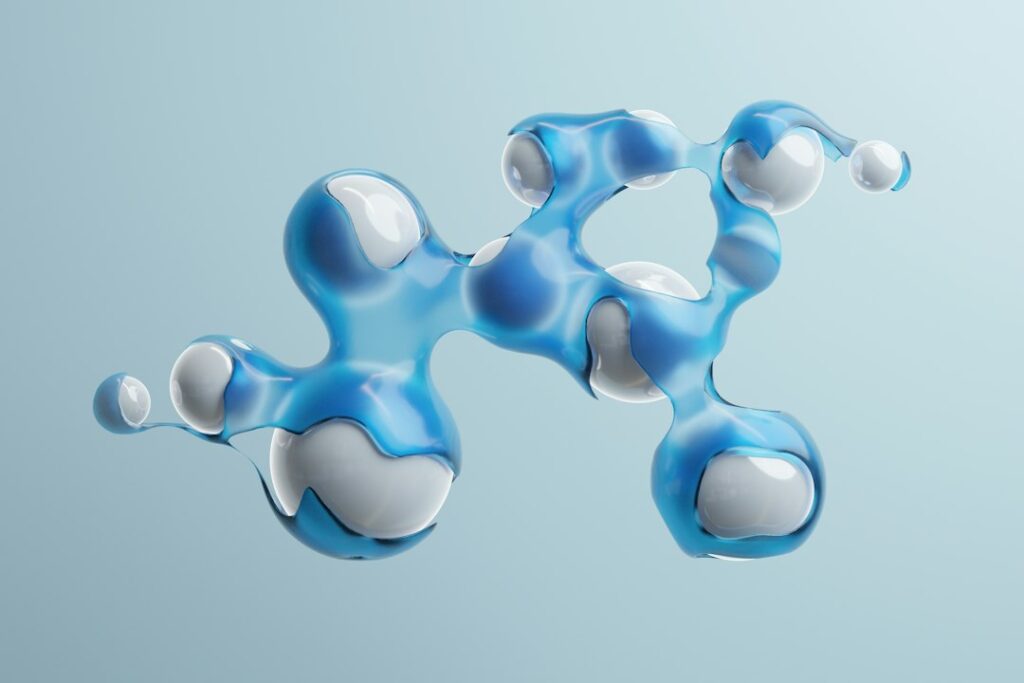
The rule you have heard is correct: do not pair silicone lubricant with a silicone toy. But understanding why changes how you think about every lube decision going forward. The explanation comes down to a chemistry principle called like dissolves like. Both silicone lubricants and silicone toys are made from polysiloxane polymers, chains of alternating silicon and oxygen atoms. The most common silicone fluid in lubricants is polydimethylsiloxane, or PDMS, which is also the core structure of the cured silicone elastomer used in high-quality toys.
When liquid PDMS from the lube meets the solid PDMS of your toy, the shorter polymer chains in the lubricant migrate into the longer, cross-linked polymer matrix of the toy. This is not a surface reaction you can wipe away. The lubricant works its way between the molecular chains that give the toy its shape and firmness, causing the material to soften, swell, and eventually become sticky or gummy. The underlying chemistry is well established: the silicone in the lubricant is absorbed into the silicone elastomer of the toy, causing it to expand and lose structural integrity.
The damage is permanent. Once the polymer chains have swelled and cross-linked, no amount of cleaning reverses it. The surface becomes porous at a microscopic level, which means it can no longer be properly sanitized. That is the real safety concern: not just a ruined toy, but a toy that now harbors bacteria in fissures you cannot see or scrub clean.
Not All Silicone Toys Are Created Equal
Here is where most guides stop, and where the conversation actually gets interesting. Not every “100% silicone” toy degrades at the same rate. The curing method matters enormously.
Platinum-cured silicone (also called addition-cured) is the gold standard. It is more chemically stable, more biocompatible, and the same grade used in medical implants. Premium brands that openly advertise platinum-cured silicone produce toys that are far more resistant to chemical degradation.
Tin-cured silicone (also called condensation-cured) is cheaper and less stable. A toy made from it can still be labeled “100% silicone,” but it has a looser polymer network that degrades faster when exposed to silicone or oil-based lubricants. Many affordable silicone toys use tin-cure processes, and manufacturers rarely tell you which method they used. When in doubt, assume tin-cured and reach for water-based lube.
The Hidden Culprit: Bottle Contamination
There is a subtlety that even careful toy owners miss. Some premium platinum-cured silicone brands advise against silicone lube not because fresh silicone lube damages their toys, but because of cross-contamination. Silicone lube is notoriously difficult to wash off without a solvent like acetone. If your lube bottle’s nozzle previously touched a jelly toy, a TPE toy, or any lower-grade material, microscopic traces of those chemicals transfer into the lube. The next time you use that bottle on a platinum silicone toy, those contaminants get deposited and held in place by the silicone lube. Over time, those foreign chemicals, not the lube itself, break down even a high-quality toy.
If you do decide to use silicone lube with a confirmed platinum-cured toy, the safest practice is a dedicated bottle that has only ever touched platinum silicone. Never the cheap stuff. Never shared between toys of different grades.
Water-Based Lubricant for Silicone Toys: What to Look For
Water-based lubricant is the only category that is universally safe for every silicone toy, regardless of cure type or quality. Water molecules are too small and chemically distinct from silicone to cause polymer swelling. But “water-based” on the label does not automatically mean body-safe. The ingredient list is where the real decisions happen, and treating lube as a wellness product rather than an afterthought means reading it the way you would read a skincare label.
Ingredients to Seek Out
The cleanest water-based formulas use a short list of plant-derived thickeners and gentle preservatives. Look for:
- Hydroxyethylcellulose or plant cellulose as the thickening agent, a plant-derived gum that creates a slick texture without irritation.
- Aloe vera as a primary ingredient in some formulas, which adds moisturizing benefits and naturally supports a vaginal-friendly pH.
- Citric acid to adjust pH into the healthy vaginal range of 3.8 to 4.5.
- Sodium benzoate and potassium sorbate as preservatives, which are food-grade and well-tolerated by sensitive tissue.
- Purified water as the base, listed first on the ingredient panel.
Ingredient Red Flags
Just because a lube is water-based and toy-safe does not mean it is good for your body. These ingredients are common in drugstore brands and carry real risks for vaginal and vulvar tissue:
- Glycerin: A sugar derivative that feeds yeast and is a frequent trigger for yeast infections. If you are prone to them, this is the first ingredient to eliminate.
- Propylene glycol: A humectant that raises osmolality and can irritate sensitive tissue, particularly in higher concentrations. It also disrupts the vaginal microbiome in some people.
- Parabens (methylparaben, propylparaben, etc.): Preservatives with suspected endocrine-disrupting effects. Easy to avoid in modern formulas.
- Polyethylene glycol (PEG) compounds: Used for texture but can be contaminated with trace impurities and raise osmolality significantly.
- Fragrance and flavoring: Unnecessary for function and among the most common causes of contact dermatitis on genital skin. Flavored lubes often contain sugars that feed yeast.
- Nonoxynol-9: A spermicide that damages epithelial tissue and increases infection risk. Avoid it entirely.
Many over-the-counter drugstore lubricants frequently contain several of these ingredients. They are cheap and widely available, but they are not formulated with intimate tissue health as the priority. If you would not put it on your face, reconsider putting it on your vulva.
Hybrid Lubes: The Cautious Middle Ground
Hybrid lubricants blend a water base with a small percentage of silicone, typically dimethicone, to offer longer-lasting glide than pure water-based formulas while being easier to clean than full silicone lube. They occupy a gray zone with silicone toys: sometimes safe, sometimes not, depending on the silicone content in the formula and the quality of the toy’s silicone.
The logic is sound in theory. A low concentration of dimethicone in a mostly water-based formula has far fewer PDMS chains available to migrate into your toy’s polymer matrix. But “fewer” is not “none.” If your toy is platinum-cured and from a premium brand, a hybrid lube with minimal silicone content is unlikely to cause visible damage. If your toy is tin-cured or of unknown quality, even a small amount of silicone in the lube can begin the degradation process.
How to Test a Hybrid Lube Safely
Before using a hybrid lube on a silicone toy, do a patch test. Apply a small amount to an inconspicuous area of the toy, like the base or handle. Leave it for several hours, ideally overnight. Rinse with warm water and mild soap, then feel the test spot. If it is sticky, gummy, softened, or discolored compared to the surrounding surface, the lube is not compatible with that toy. If the surface feels unchanged, the lube is likely safe for ongoing use with that specific toy.
Some hybrid lubes are explicitly labeled “safe for toys” or “toy-compatible.” That claim is only as trustworthy as the manufacturer’s testing. When a brand is transparent about its formula and the silicone percentage is low, the risk is manageable. When the ingredient list is vague or the silicone content is undisclosed, default to pure water-based.
Oil-Based Options and When They’re Actually Safe
Oil-based lubricants, including coconut oil, mineral oil, and petroleum jelly, degrade silicone toys the same way silicone lube does: by penetrating the polymer matrix and causing swelling, softening, and eventual structural breakdown. For silicone toys, oil-based lube is a hard no. But there is a narrow exception that changes the entire calculation.
Oil-based lubricants are completely safe with glass and stainless steel toys. These materials have no polymer matrix to penetrate. They are non-porous, impervious to oil, and can be sterilized by boiling. If your collection includes glass wands or steel plugs, oil-based lube is actually an excellent option: it lasts longer than water-based, never gets tacky, and does not dry out. Coconut oil in particular works well for body-only use with glass or steel, provided you are not using latex condoms (oil degrades latex within minutes, reducing effectiveness significantly).
The Coconut Oil Caveat for Vaginal Use
Even with compatible toys, coconut oil carries a separate concern for vaginal use. It is alkaline, while a healthy vagina is acidic (pH 3.8 to 4.5). Introducing an alkaline substance can shift vaginal pH upward, creating an environment that favors bacterial vaginosis over the protective lactobacilli that keep things balanced. Coconut oil can also trap bacteria inside the vaginal canal if not thoroughly cleaned afterward. If you are someone who gets yeast infections or BV, oil-based lube of any kind is worth approaching with caution, even when your toy material allows it.
One more consideration: oil-based lube is nearly impossible to fully remove from a silicone toy. Even if you think you washed it off, residue can remain and continue degrading the material over time. This is why the “safe with glass and steel only” rule is absolute, not approximate.
| Lube Type | Silicone Toy Safe? | Condom Safe? | Key Consideration |
|---|---|---|---|
| Water-based | Yes, universally | Yes (all condom types) | Check osmolality and glycol content for tissue health |
| Aloe-based (water-based) | Yes, universally | Yes (all but polyurethane) | Often lowest osmolality; FDA-cleared options available |
| Hybrid (water + silicone) | Maybe, patch test first | Yes (most formulas) | Safe with platinum-cured toys; risky with tin-cured or unknown |
| Silicone-based | No (degrades silicone) | Yes (latex, polyisoprene) | Best for water play and body-only use; never with silicone toys |
| Oil-based (coconut, mineral, etc.) | No (degrades silicone) | No (destroys latex) | Only safe with glass or stainless steel toys |
The Best Lubricant for Silicone Toys: Curated Picks
Specific products matter because the gap between a thoughtfully formulated lubricant and a cheap one is measured in pH points, osmolality values, and ingredient transparency. These picks are water-based, universally safe for silicone toys, and formulated with intimate tissue health as a priority. Formulas can change, so always verify the current ingredient list and published specs before purchasing.
Sliquid Naturals H2O
Sliquid Naturals H2O is one of the most frequently recommended water-based lubricants among pelvic health professionals, and for good reason. According to Sliquid’s published specifications, all of their formulas sit at a pH of 4.1 to 4.4 and an osmolality under 1,200 mOsm/kg, typically in the 500 to 800 range. The H2O formula is free of glycerin, glycol, propylene glycol, parabens, PEG, sulfates, and added fragrance. Its ingredient list is refreshingly short: purified water, plant cellulose, guar conditioners, sodium benzoate, potassium sorbate, and citric acid. It is explicitly labeled safe for silicone toys and all sexual activity.
Sliquid Organics H2O
The organic version of Sliquid’s H2O goes further on osmolality. Its osmolality has been reported at approximately 106 mOsm/kg in third-party testing, well below even the WHO’s ideal threshold of 380 mOsm/kg. Its pH sits at 4.0 to 4.4, squarely in the healthy vaginal range. If you want a lubricant that is as close to your body’s own chemistry as possible, this is the formula to look at. It is organic, vegan, cruelty-free, and safe with condoms and all toy materials.
Aloe Cadabra Natural Aloe

Aloe Cadabra is a 95% organic aloe vera-based lubricant that earned FDA 510(k) clearance (K124044), meaning it passed the regulatory review process for safety and substantial equivalence. According to Aloe Cadabra’s published data, it has an osmolality of approximately 172 mOsm/kg, close to the vagina’s natural osmolality of 260 to 290 mOsm/kg, and a pH of 3.8 to 4.2. The NYT Wirecutter review team selected it as their top pick for its lasting glide, low stickiness, and compatibility with condoms and toys. It is thick enough for anal use while remaining pH-balanced for vaginal use, making it one of the most versatile options available.
pH, Osmolality, and Why Your Vulva Has Opinions
Two measurements determine whether a lubricant supports or undermines your vaginal health: pH and osmolality. Most people have never heard of osmolality, and that gap is exactly why so many drugstore lubes cause irritation, yeast infections, and bacterial vaginosis without their users connecting the dots.
pH: The Acidic Gatekeeper
A healthy vagina maintains a pH between 3.8 and 4.5. This acidity is not accidental. It is maintained by lactobacilli, beneficial bacteria that produce lactic acid and create an environment hostile to pathogens. When a lubricant has a high pH, it shifts the vaginal environment toward alkalinity, which favors the overgrowth of harmful bacteria and increases susceptibility to bacterial vaginosis. The World Health Organization’s lubricant specifications recommend a pH of 4.0 to 7.0, with 4.5 being ideal for vaginal use. For anal use, a slightly higher pH of 5.5 to 7 is more appropriate since the rectum is closer to neutral.
Buffering capacity also matters. A lubricant with low buffering capacity will briefly shift vaginal pH and then let the body recover quickly. A lube with high buffering capacity holds the pH in an altered state longer, giving disruptors more time to take hold. The WHO notes that lubricants with low buffering capacity are preferred precisely because they minimize this disruption window.
Osmolality: The Cell Damage You Cannot Feel
Osmolality measures the concentration of dissolved particles in a solution. Your vaginal secretions have an osmolality of 260 to 290 mOsm/kg, and semen sits at 250 to 380 mOsm/kg. When a lubricant’s osmolality is dramatically higher than your tissue fluids, it draws water out of your epithelial cells through osmosis. The cells shrink, the tissue barrier weakens, and microscopic damage occurs. You may not feel it in the moment, but the compromised tissue is more vulnerable to irritation, infection, and even STI transmission.
The WHO’s ideal threshold is 380 mOsm/kg or less. Because most commercial lubricants on the market range from 2,000 to 6,000 mOsm/kg, the WHO set an interim upper limit of 1,200 mOsm/kg for procurement, acknowledging that stricter limits would eliminate most available products. The primary driver of high osmolality is glycol content. Glycerol and propylene glycol are added as humectants, and to keep osmolality under 1,200 mOsm/kg, glycerol should not exceed 9.9% of the formula and propylene glycol should stay under 8.3%.
This is why a lube can be water-based, toy-safe, and still bad for your body. A formula loaded with glycerin and propylene glycol will not harm your silicone vibrator, but it can damage your vaginal epithelium over time. The best lubricant for silicone toys is one that protects both the toy and the tissue it touches.
Why This Matters More Than You Think
If you have ever used a lubricant and felt burning, developed a yeast infection a few days later, or noticed recurrent BV without a clear cause, the lube is a likely suspect. Vulvar and vaginal tissue is thinner and more permeable than skin elsewhere on your body. It absorbs what you put on it. A lubricant with high osmolality, elevated pH, and irritating preservatives is not just uncomfortable. It is actively working against the microbiome that keeps you healthy.
Choosing a lubricant with a published pH between 3.8 and 4.5 and an osmolality under 1,200 mOsm/kg, ideally under 380, is one of the simplest interventions for recurrent irritation. If symptoms persist despite switching to a clean formula, that is worth a conversation with a gynecologist or pelvic health specialist.
What About Glass and Stainless Steel Toys?
Glass and stainless steel toys play by completely different rules. Both materials are non-porous, have no polymer matrix, and are impervious to every category of lubricant: water-based, silicone, hybrid, and oil-based. This means you can use silicone lube with a glass wand or steel plug without any risk of degradation. You can use coconut oil. You can use whatever formula gives you the sensation and longevity you want.
The only constraints are condom compatibility and personal tissue health. Silicone lube is safe with latex and polyisoprene condoms but not polyurethane. Oil-based lube destroys latex condoms. And as discussed, oil-based lubes can disrupt vaginal pH even when the toy material is fine. So the lubricant rules for glass and steel are not about protecting the toy. They are about protecting your body and your barriers.
One practical note: glass and steel toys are dense and unforgiving. A thicker lubricant, whether water-based or hybrid, provides more cushion and reduces friction against firm surfaces. A thin, watery formula may not provide enough glide for comfortable use with these materials. Sliquid H2O or Aloe Cadabra, both with creamy textures, work well here.
A Quick Framework for Choosing
By now the decision tree should feel clear. If your toy is silicone, use water-based lube, period. If it is platinum-cured and from a reputable brand that specifies the cure method, a hybrid lube with low silicone content is a calculated risk worth a patch test. If your toy is glass or steel, you have full freedom to choose based on sensation preference, condom compatibility, and tissue health. And regardless of toy material, always check the pH and osmolality of any lubricant you put inside your body.
Lubricant is not an accessory. It is a product that contacts some of the most sensitive, absorbent tissue in your body, often repeatedly. The brands that publish their pH, osmolality, and full ingredient lists are the ones taking your health seriously. The ones that do not are hoping you will not ask.
What would it feel like to choose a lubricant with the same scrutiny you bring to your skincare, your supplements, and your food? That shift in mindset is where better sex and better health start. If you are building a body-safe toy collection and want guidance on materials, compatibility, and care, Xlucia offers curated options designed with the same wellness-first standards this article is built on. Explore what speaks to you, and pair it with a lube that protects both the toy and you.
Frequently Asked Questions
Can I use silicone lube with a silicone toy if I put a condom on the toy?
Yes. A latex or polyisoprene condom creates a physical barrier between the silicone lubricant and the silicone toy, preventing chemical contact. This works well for toys you want to use with silicone lube for water play or longer-lasting glide. Use a fresh condom each time and avoid polyurethane condoms, which may not provide the same barrier integrity.
How do I know if my toy is platinum-cured or tin-cured silicone?
Reputable premium brands typically state platinum-cured or addition-cured silicone on their packaging or website. If the label just says 100% silicone without specifying the cure method, assume it could be tin-cured and stick to water-based lubricant. Platinum-cured silicone is the same medical-grade material used in implants and is significantly more chemically stable.
What is the difference between osmolality and pH in lubricants?
pH measures how acidic or alkaline a product is, while osmolality measures the concentration of dissolved particles. Both matter for vaginal health. A good vaginal lubricant should have a pH around 3.8 to 4.5 and an osmolality ideally under 380 mOsm/kg, or at minimum under 1,200 mOsm/kg per WHO guidelines. High osmolality draws water out of cells and damages epithelial tissue, while high pH disrupts the vaginal microbiome.
Are flavored or warming lubricants safe for silicone toys?
Flavored lubes often contain sugars or glycerin, which can feed yeast and irritate vaginal tissue. Warming lubes use ingredients like capsaicin or menthol that can cause contact dermatitis. Both types are typically water-based and will not damage silicone toys, but they carry higher risks for irritation and infection. If you have sensitive skin, stick to unflavored, unscented formulas.
How do I patch test a hybrid lube on my silicone toy?
Apply a small amount of the hybrid lube to an inconspicuous area of the toy, such as the base. Leave it for several hours or overnight, then rinse and check the surface. If the area feels sticky, gummy, softened, or discolored compared to the rest of the toy, the lube is not compatible. If it looks and feels unchanged, it is likely safe for that specific toy.